Third Class
I
(5)
Unit: Basic Movement Concepts
Title: Exploring hand clapping, up and downs and marching
Introduction
This
is the third class with early childhood kids with special needs at
Linda Ray. We will repeat the same routine and the same
songs/dances. It is important to continue re-enforcing the
skills that they have already been introduced to. Today, Carol and I will have the
three same groups (0-1 (infants), second 1-2 (toddlers,
third 2-3 (toddlers). Sessions will be 30 min. each.
As we did in the previous lesson, we will
explore basic concepts such as "hand clapping, up and downs and marching" using a number of songs, props and games.
II
Based on MDCPS Curriculum / Dance / Kindergarten (4)
https://www2.dadeschools.net/students/cbc/Volume%20III/Dance/Elementary/Grade%20K/Dance%20-%20K.pdf
- Component I: Movement skills and underlying principles
- Learning Objective: Explores different levels of body movement
- Competency: The student can demonstrate levels of body movement
III
Main Lesson

1
2
3
4
5
6
Crawling, Creeping and Walking Patterns: Scaly Little Lizard
7
8
Too Shy For Show And Tell - Overcoming Shyness Story
9
Listen and Move
10
Goodbye Song
IV
A Note to Remember
V
Case Studies
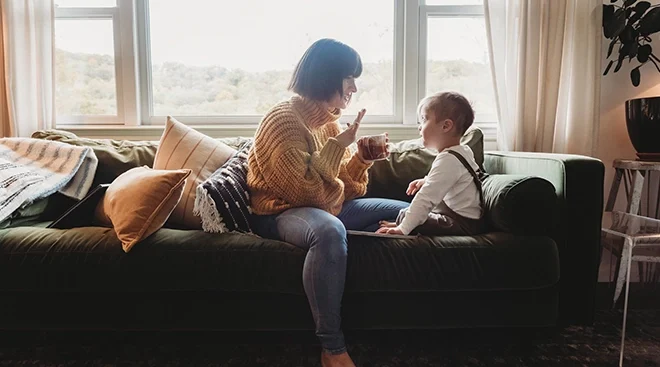
How to Teach Baby 25 Key Words in Baby Sign Language
Baby sign language is a set of simple hand gestures and movements, otherwise known as signs, that correspond to common words you use with baby every day. It’s a helpful tool to enhance communication between hearing parents and babies who can hear but can’t yet talk. Sometimes the baby signs are the same as those used in American Sign Language (ASL), but not always. “Baby sign is not a technical sign language, such as ASL or BSL (British sign language), which are primarily used by the deaf community and are more complex, with grammar and sentence structure,” says Jann Fujimoto, CCC-SLP, a certified speech-language pathologist in Wisconsin. “It’s a looser version that uses just signs for individual words.”
Academics began making powerful observations about how hearing families could benefit from using baby sign language around 200 years ago, thanks to the work of linguist William Dwight Whitney in the 1800s. But it wasn’t until the 2000s that baby sign language became readily available to parents through workshops, classes and baby sign language books.
VI
References
1) Children's Hospital Colorado. What is dance/movement therapy?https://www.childrenscolorado.org/doctors-and-departments/departments/child-life/ponzio-creative-arts-therapy/dance-movement-therapy/
2)
Building Attachments. Ages 0-2. Keep Connected.
https://keepconnected.searchinstitute.org/understanding-ages-and-stages/ages-0-2/
3) MDCPS Competency Based Curriculum. Volume III. Dance. Elementary. Grade K. https://www2.dadeschools.net/students/cbc/Volume%20III/Dance/Elementary/Grade%20K/Dance%20-%20K.pdf
4) Zero to Three. https://www.zerotothree.org/why-0-3/
5) How to teach Baby Sign Languages. https://www.thebump.com/a/how-to-teach-baby-sign-language
VII
Reflections
1. I was a little late because there was a game in the stadium, so all adjacent streets were blocked. As son as I got int the infant's room, there was a girl crying to the top of her longs. I extended my arms and the assistant handed her to me. I held her and she was quite the entire session. Carol, half playing, half serious, asked me to do nothing else by that.
2. The second class with the toddlers (1-2), was unusually hyperactive. We decided it would be better to conduct instruction in one of the self-contained rooms, as opposed to the open area where distractions and interruptions take place all the time.
3. The use of the noodles was not as effective at this point, but the elastic band was a total success. It created a frame for the children to jump in, other grabbed the band, others would come in and out of the band. Carol grabbed one side and I grabbed the opposite side.
4. The third group had only 3 kids present. Isaiah, the kid that is always with Niurka, the assistant, for the first time showed interest in what was happening, did not cry and even clapped his hands and one time.


Comments
Post a Comment